
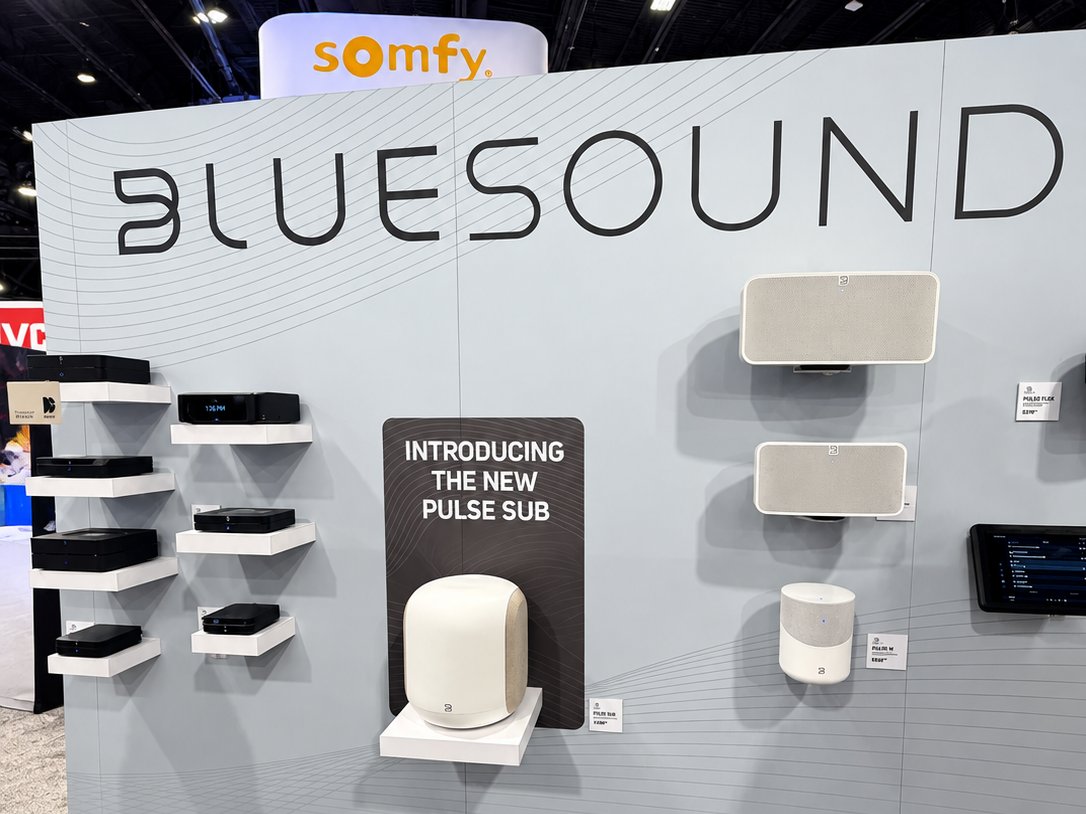
Every fall, our team heads to CEDIA Expo to get hands-on with what's next in home technology.
This year, we spent a lot of time with Bluesound.
Not just to look at new gear. To pressure-test it against the questions our clients ask us every week.
If you're considering music throughout your home, a better TV experience, or both, here are the five questions we'd ask first. And what we learned about each one.
Whether you're building new, remodeling, or simply tired of a soundbar that doesn't quite fill the room, these questions will help you make a confident decision, with us or with anyone else.
1. Will it actually sound good in my room?
This is the question most people skip.
High-resolution audio gets a lot of attention, and Bluesound supports it, up to 24-bit/192 kHz. It's a real step up in detail.
But the room has the final say.
Large windows, stone, tile and open floor plans all reflect sound. In those spaces, speaker choice and placement do more for your listening experience than any file format.
That's why our process starts with a walkthrough of your home, not a catalog.
During that visit, we look at the things that shape sound but rarely make it onto a spec sheet:
- Surfaces. Hard floors, glass and high ceilings make a room lively. Rugs, upholstery and bookshelves calm it down.
- Layout. Where you sit, where the TV goes, and how open the space is to the kitchen or the next room.
- How you'll use it. Background music while you cook needs a different approach than movie night or serious listening.
With that in mind, we choose speakers that fit both the room and the way you live in it. Sometimes that means a pair of discreet in-ceiling speakers. Sometimes it means in-wall speakers aimed at the sofa. Sometimes it means something you'll be happy to see on a shelf.
Great sound is rarely about buying the most expensive component. It's about the right components in the right places.
2. Do I have to see the equipment?
Usually, no.
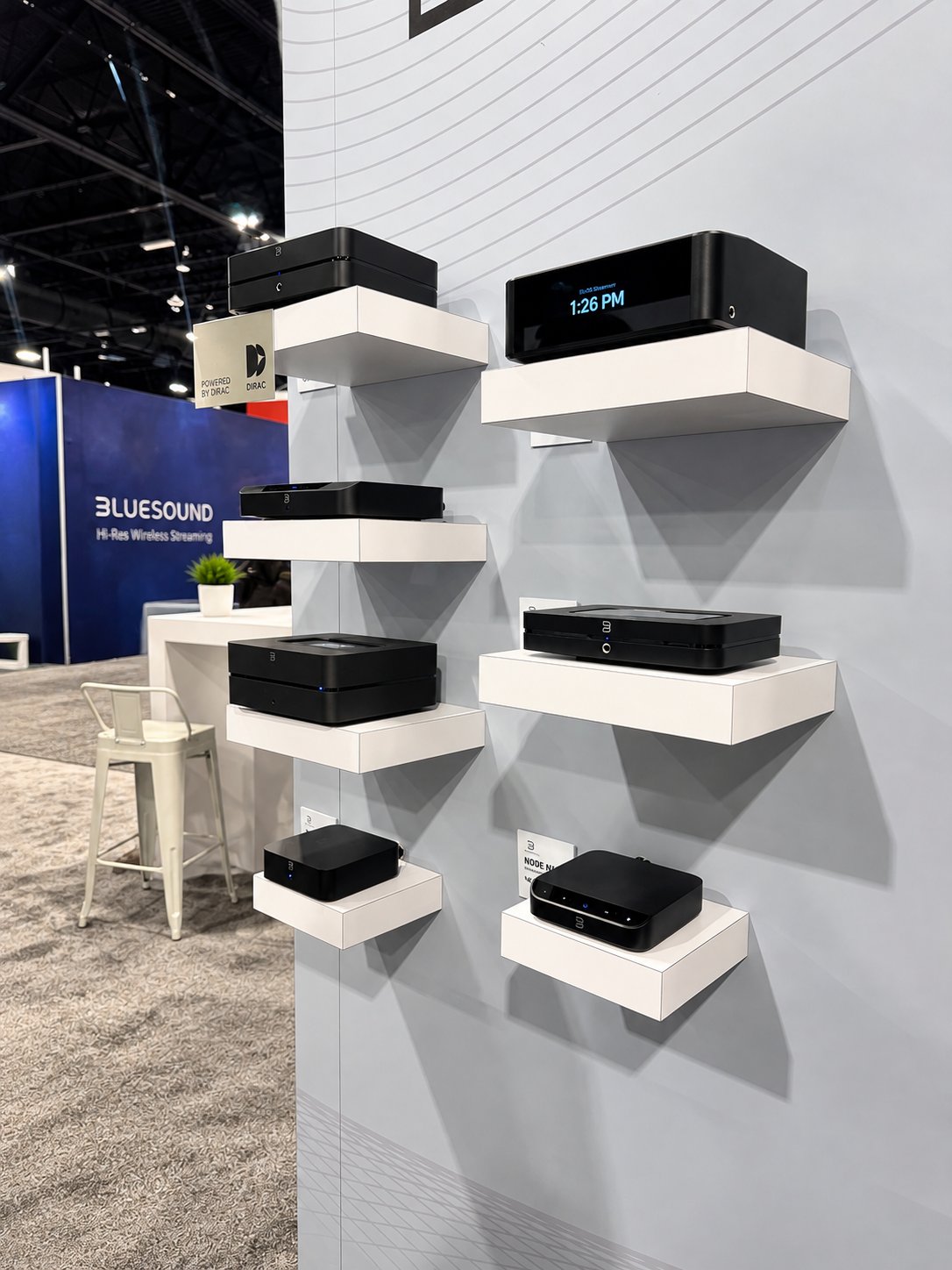
The Bluesound PowerNode is a compact streaming amplifier. It powers speakers built into your walls or ceiling, and it connects to your TV with a single HDMI eARC cable.
Its efficient GaN amplifier design means it doesn't need a big, hot cabinet. We can place it in a closet, a credenza or a central equipment rack.
What stays visible is up to you.
A quick note on HDMI eARC, because it comes up a lot. It's the connection that lets your TV send its audio to a separate amplifier. With the PowerNode connected this way, the TV's own remote controls the volume, and dialogue, movies and sports play through your speakers instead of the TV's built-in ones.
The PowerNode can run two speakers in stereo, or three channels if you want a dedicated center speaker for clearer dialogue. Add a subwoofer and the foundation of a home theater is in place, without a large receiver in your living room.
For architects, designers and builders we work with, this is often the deciding factor. The design stays clean, and the homeowner still gets the performance they're paying for.
3. What if I can't add speakers to the walls?
Condos, rentals and older homes often have limits on what can be opened up.
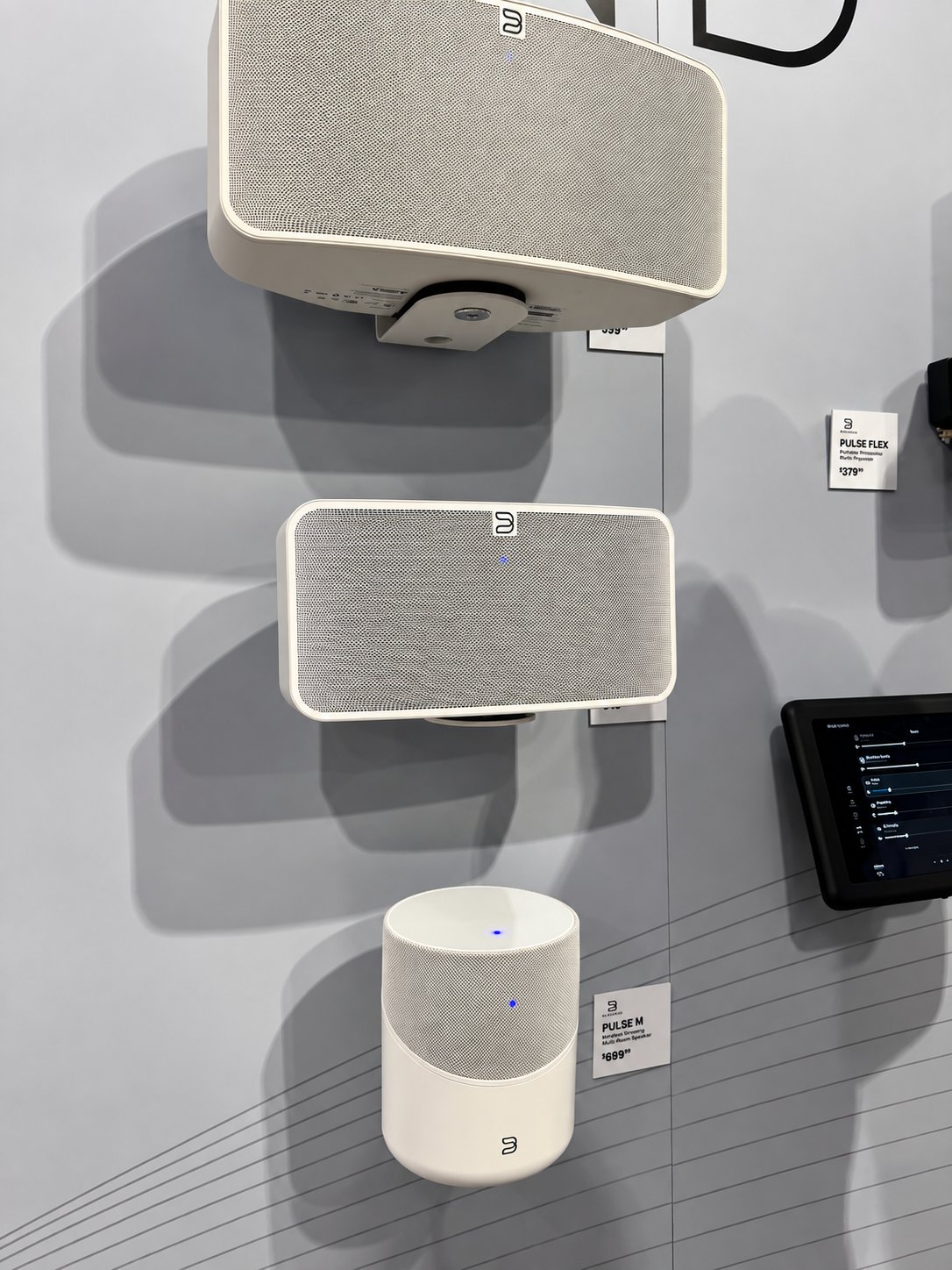
Bluesound's Pulse speakers are wireless. They only need a power outlet.
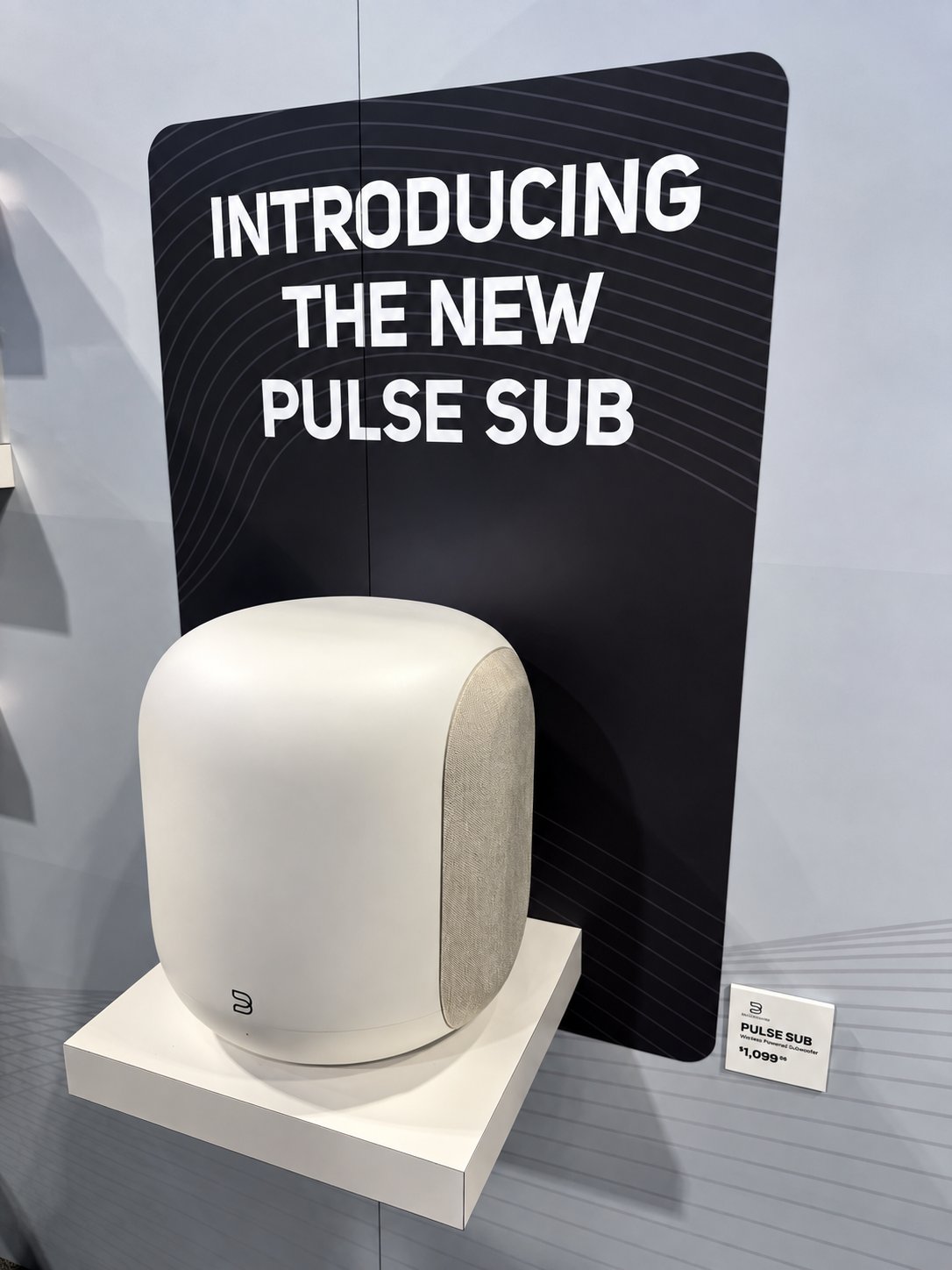
We can pair wired front speakers with wireless Pulse speakers behind your seating and a wireless Pulse Sub, creating true surround sound with no cables crossing the room.
It also grows with you. Many clients start with music and add surround sound later.
Setup is handled in the BlueOS app. Each speaker is assigned a role, front, surround or subwoofer, and the system keeps the wireless speakers in time with the wired ones so voices and effects line up with what's on screen.
This approach is also helpful if you move. Wireless speakers come with you, and the rest of the system can be reconfigured in your next home.
4. Will it keep working?
Whole-home audio is only as reliable as the network behind it.
Bluesound's BlueOS app streams services like Tidal, Qobuz and Spotify to every room at once, with each room kept in step. That takes steady, well-designed Wi-Fi and wiring.
When music cuts out, the speakers are rarely the problem. The network usually is.
That's why we design and install the network along with the audio system, so you're not troubleshooting your router on a Friday night.
A network built for whole-home audio typically includes:
- Professional-grade wireless access points placed so every room, and often the patio, gets a strong signal
- Wired connections to key equipment wherever practical, which keeps wireless capacity free for phones and laptops
- Ongoing visibility, so issues can often be spotted and fixed before you notice them
It's not the most exciting part of the project. But it's the part that decides whether your system feels effortless or frustrating a year from now.
5. Will it get better, or get outdated?
This was our biggest takeaway from CEDIA 2026.
In May 2026, Bluesound added Dirac Live room correction to the latest PowerNode through a software update. Dirac Live listens to your room with a measurement microphone, then adjusts the sound to reduce echo and smooth out boomy bass.
Same hardware. Noticeably better sound.
When you choose a system, ask how it's updated and whether new features arrive over time. It's one of the best signs your investment will hold up.
Here's why room correction matters so much. Every room boosts some bass notes and swallows others, and hard surfaces bounce sound back toward you a split second after it leaves the speaker. Your ears hear that as boominess or a lack of clarity.
Room correction measures those effects from where you actually sit and compensates for them. It isn't a substitute for good speaker placement, but it can make a well-designed system sound noticeably tighter and clearer, especially in rooms with lots of glass or stone.
A few questions worth asking any provider:
- Does the system receive regular software updates?
- Have past updates added new features, or only fixed problems?
- Who sets up and calibrates features like room correction?
Why Texas is the best place to build a system like this
Everything above applies anywhere. But Texas homes, and Central Texas homes in particular, make a strong case for this kind of system.
We live outside as much as inside. Long warm seasons mean patios, pools, outdoor kitchens, and covered porches get real use for much of the year. Whole-home audio that extends to those spaces, and stays in sync with the music inside, turns them into true extensions of the house.
We build our homes with glass and stone. Hill Country views call for big windows. Limestone, tile, and polished concrete are everywhere, partly because they suit the climate. They're beautiful, and they're exactly the kind of hard, reflective surfaces where careful speaker placement and room correction like Dirac Live make the biggest difference.
Open floor plans are the norm. Living, dining and kitchen often flow together in one large space. That's ideal for entertaining, but it makes sound harder to control. Hidden architectural speakers, zoned and tuned properly, let the music fill the space without overwhelming the conversation.
Heat is a real design factor. Equipment closets, garages, and media cabinets can get warm here. Efficient, cool-running amplification like the PowerNode's GaN design is a smart fit, though we still plan ventilation for every equipment location.
So much is being built right now. New homes and major remodels across the Austin area give homeowners a rare chance to plan audio, video, and networking before the walls close. That's when hidden systems are easiest and most affordable to do well.
In short, the way Texans build and live naturally matches invisible, high-performance audio. We get to design these systems for homes we know well.
What working with Smarter Homes looks like
If you decide to move forward with us, here's what to expect.
Consultation. We start with a conversation about how you use your home, what you listen to, and what you want to see, or not see, in each room.
Design. We recommend speakers, equipment locations and network coverage, and walk you through options at different budgets.
Installation. Our team handles wiring, mounting, equipment placement and setup. In new construction, we coordinate with your builder and designer from the early stages.
Tuning. We calibrate the system, including room correction where available, and set up your streaming services and favorites.
Walkthrough and support. We show you how everything works and stay available when you have questions or want to expand.
Quick answers
Is Bluesound better than Sonos? Both are excellent, and we install both. Bluesound tends to suit listeners who care about high-resolution files or use Roon to manage a large music library. We'll help you decide based on how you listen.
Can I start small? Yes. A single room or a TV upgrade is a common first step, and the system can expand later.
Do I need a professional? For wireless speakers, not always. For hidden speakers, room correction and a network that can handle whole-home streaming, a professional design makes a big difference.
Can I use the speakers I already have? Often, yes. The PowerNode can power many existing passive speakers, so a good pair you already own may be the start of your new system.
Can I control it with my phone? Yes. The BlueOS app lets you choose music, group rooms together and adjust volume from your phone or tablet.
When should I plan audio in a new build? As early as possible. Running wire and planning speaker locations before drywall goes up is far simpler and more affordable than adding them later.
Talk to Smarter Homes
We design and install audio, video, networking and smart home systems for homes across the Austin area.
If you'd like to hear what's possible in your space, we'd be glad to show you.