
Most smart home problems in Austin homes do not start with a bad product. They start with a plan that never looked at the lot, the rack location or who would own the system after move-in. These 12 questions are the ones we would ask if we were hiring an installer for our own house. A good answer to each one is specific to your home. A vague answer is a warning.
If you are still checking credentials, licenses and reviews, start with our Lutron team's guide to picking a home integrator. This guide picks up from there.
1. Can I start with a virtual consultation, and can I see your work in person?
A good installer will talk through your project before anyone visits the house: the project stage, the systems you care about and any plans you already have. You should also be able to see and touch the equipment before you buy it. At Smarter Homes the first step is a virtual consultation or a showroom visit at our West Lake Hills showroom, 5524 Bee Caves Rd, Suite J8. Both are by appointment.
2. How will you plan around this lot and this house?
A heavily treed lot in West Lake Hills, a hillside with elevation changes, a detached guest house or a pool cabana all change the design. Ask how the installer will cover outdoor living areas and every structure on the property. Between buildings, we run fiber and Cat 6 in conduit, planned before construction starts.
3. Where will the equipment rack go, and what does it need?
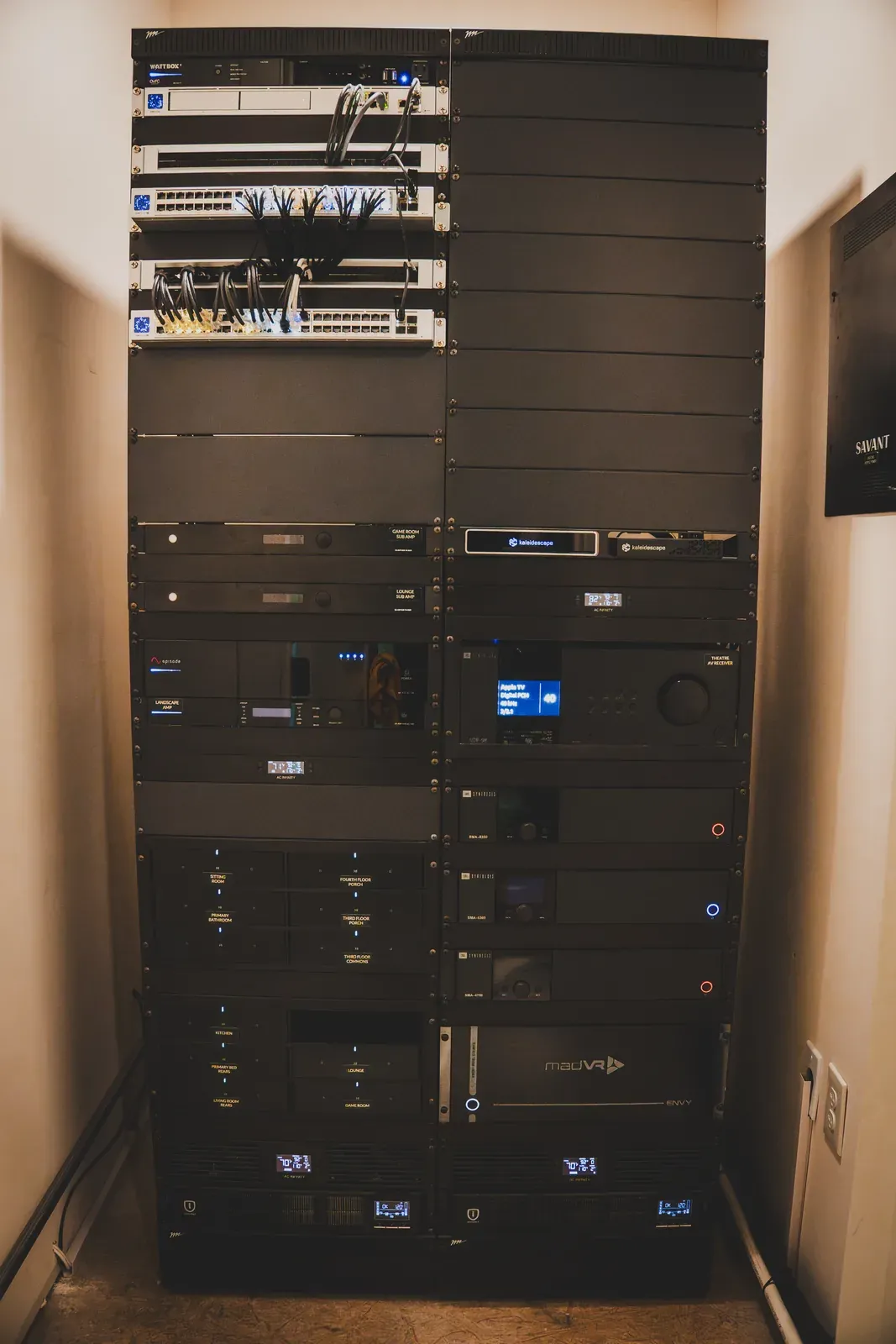
Amplifiers, network gear and controllers belong in one rack, not scattered through closets. Ask where it will sit and whether that spot has power, cooling and a network drop. If the installer cannot answer, the rack will end up wherever there is room, which is rarely where it should be.
4. Is the network designed first?
Lighting control, shades, cameras, audio and streaming all depend on the network. Ask whether the access points are wired and placed for your property, and whether cameras, guests and control devices get their own separate networks. Our home networks are UniFi systems planned like a commercial network, with a structured rack.
5. Who designs the lighting?
Lighting design and lighting control are different jobs. Lighting design decides where light goes and how it feels. Lighting control is the system that runs it. Smarter Homes does not do lighting design in house. The design comes from our partner lighting designer or from your own designer or architect, and we engineer, install and program the Lutron control system from that design. See partner lighting design. Ask any installer the same question and expect a clear answer.
6. Is the alarm a separate system from the cameras?
It should be. We think of it as walls in and walls out. Inside the walls, a home security system is a Qolsys panel with PowerG sensors, monitored through Alarm.com, covering intrusion, smoke, heat, carbon monoxide and water. Outside the walls, cameras, the gate and the driveway run on UniFi. Each system does its own job, and an arrival scene can still link them: UniFi opens the gate, and Alarm.com opens the garage, unlocks the door and disarms the alarm.
7. Which platforms do you support long term, and can each part stand on its own?
Ask for the list. Ours is Lutron, Ketra, Josh.ai, UniFi, Qolsys with Alarm.com and Sonos. Then ask what happens if one part fails. In a well-planned home, lighting, shades, security, audio and the network each work on their own, then work together. One failed controller should not take the whole house down with it.
8. What will you document behind the walls?
You want a record of the structured cabling, rack locations, network architecture, power requirements and subsystem connections. That record is what lets the home be serviced, expanded and upgraded years from now, by your installer or anyone else.
9. What has to be decided before the walls close or the concrete is poured?
Some choices cannot wait. Shade pockets, power and control locations for motorized shades. Conduit to the patio, pool and landscape before the hardscape goes in. Gooseneck posts, camera mounts and conduit to the gate before the driveway is poured. Back boxes for main listening room speakers. A good installer will give you this list early. Our prewire planning guide covers it in detail.
10. What happens between the first meeting and installation day?
Ask for the steps. Ours are a virtual consultation, an early budget range based on the home and the systems, an on-site visit when needed, a design agreement that defines the systems and documentation, and then deployment: installation, programming, testing, commissioning and handoff. You can start a rough number now with the smart home budget planner.
11. Can you work on a system someone else installed?
Many Austin homeowners already have a professionally installed system that needs help. Ask how the installer will evaluate it. We review the existing system, documentation, network, wiring and equipment first, then tell you what can be supported, what should be upgraded and what may need to be replaced. See retrofit wiring for how upgrades work in finished homes.
12. What does support look like after move-in?
Ask who you call and how they reach the system. With a support agreement, we provide remote support, system monitoring, troubleshooting, software updates and on-site service. Because we can reach the system remotely, many issues are fixed without waiting for a visit, by the same team that designed and installed it.
How Smarter Homes answers these questions
Smarter Homes, in business since 2006, is HTA Estate Certified and holds Texas DPS Private Security license B28437501, with 160+ Google reviews. We design and install home technology for homes in Westlake, Barton Creek, West Lake Hills, Tarrytown, Rollingwood, Spanish Oaks, Bee Cave, Lake Austin waterfront homes and across Austin.
Bring your plans and these 12 questions to a virtual consultation or a showroom visit, or call (512) 775-6101. You can also email your plans ahead of the meeting to support@smarterhomesaustin.com.
Frequently asked questions
What questions should I ask before choosing a smart home system or installer? Ask how they will plan around your lot and structures, where the rack goes, whether the network is designed first, who does the lighting design, whether the alarm is separate from the cameras, what they document and what support looks like after move-in.
Should my alarm and cameras be on one system? We keep them separate. The alarm (Qolsys with Alarm.com) covers the house from the walls in. Cameras and the gate run on UniFi from the walls out. An arrival scene can still link the two.
Can a new installer take over my existing smart home system? Often, yes. We first evaluate the existing system, documentation, network, wiring and equipment, then tell you what can be supported, what should be upgraded and what may need to be replaced.